
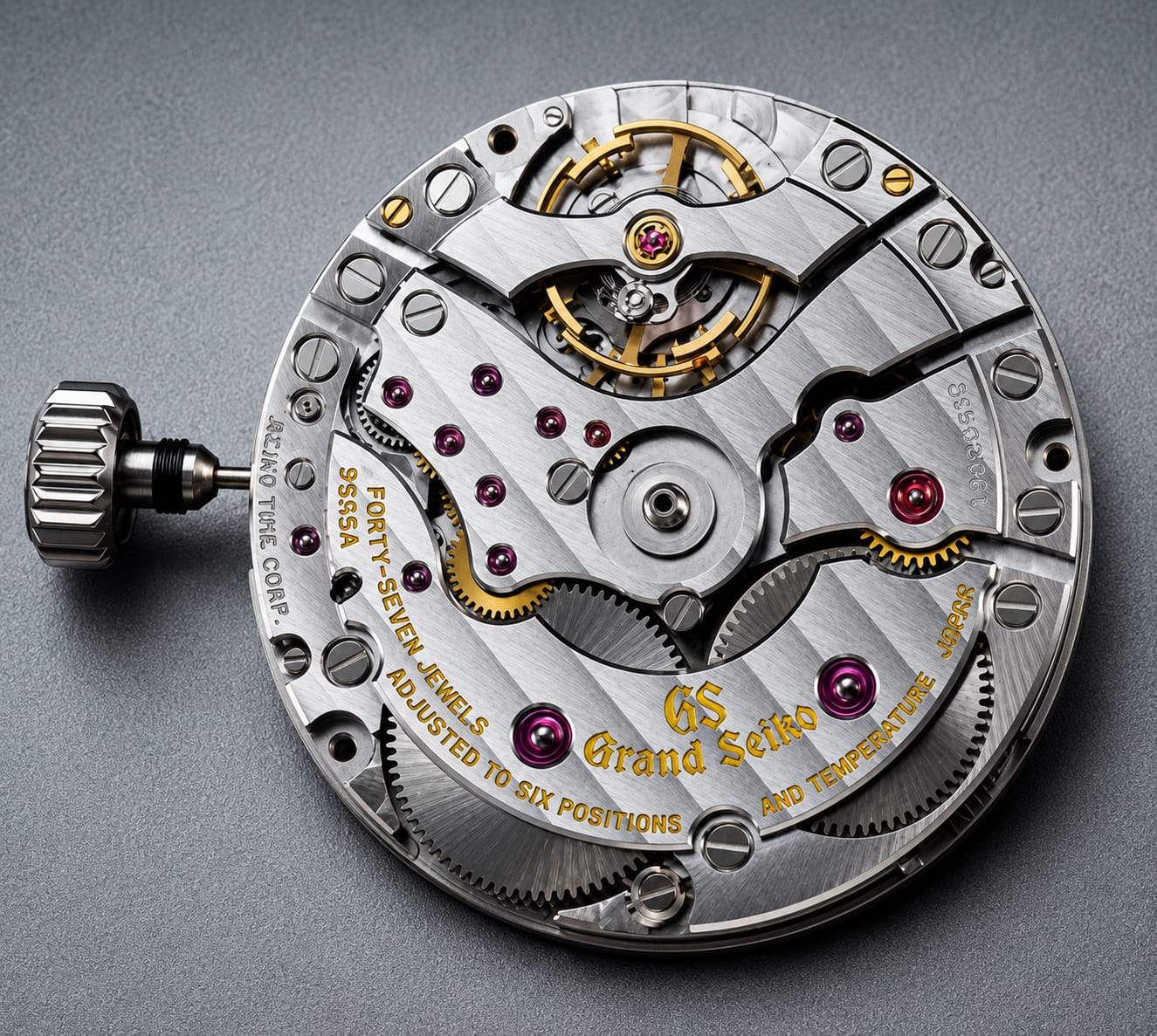
Getting to Know Movements Developed by Watch Brands Themselves
In the world of mechanical watches, the term “in-house movement” is often seen as a sign of a watch brand’s technical capabilities. Simply put, an in-house movement is a movement that is designed, developed, and assembled by the brand itself.
But there’s an important point to understand: calling a movement “in-house” doesn’t necessarily mean that every single component is made by the brand.
The definition can be quite flexible. A brand may design the movement’s architecture and develop its technology internally, while working with specialized manufacturers to produce certain components.
That’s why an in-house movement is better judged by how much control the brand has over the entire process from research, design, and development to the production of key components and final assembly.
Why Do Brands Develop Their Own Movements?
The main reason is simple : it gives a brand more freedom to create its own identity and character. With an in-house movement, a brand has greater control over the watch, from the movement architecture and regulation system to its dimensions, power reserve, and specific features.
In many cases, the movement itself becomes an important part of what makes the brand different from its competitors. Some of the major names known for developing their own movements include Rolex, Grand Seiko, Seiko, Orient, Omega, Tudor, and Nomos Glashütte.
Interestingly, each brand takes a different approach. Some focus on durability, reliability, and everyday performance. Others put more emphasis on the beauty of the movement’s construction or the quality of its finishing. So, just because two movements are both called “in-house” doesn’t mean they are automatically at the same level of technology.
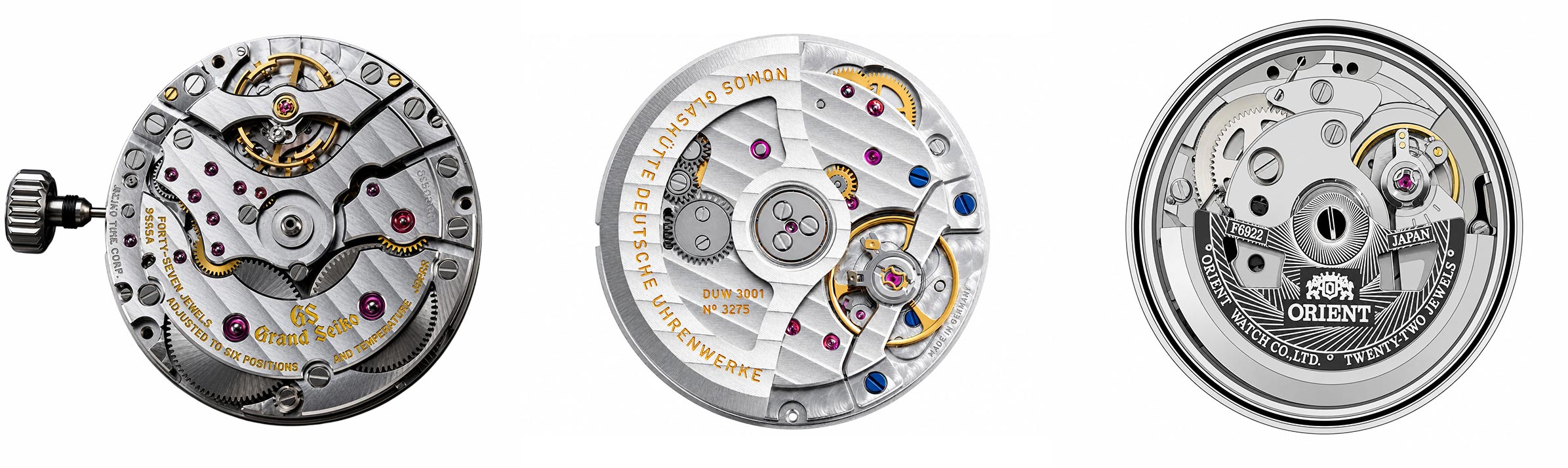
Why Are In-House Movements Usually More Expensive?
Developing a movement from scratch takes a lot of time, money, and expertise. The process can involve everything from design research and prototype development to durability testing, component production, assembly, regulation, and final testing. All of this requires skilled professionals and quality-control systems that meet the brand’s manufacturing standards.
A brand also needs to invest in advanced production equipment, manufacturing facilities, technicians, and watchmaking specialists who can maintain consistent quality. Naturally, all of these investments have an impact on the final price of the watch.
But a higher price isn’t simply because the movement is made in-house.
After-sales service, durability testing, and the quality of the finishing also play an important role in determining the overall value of a watch.
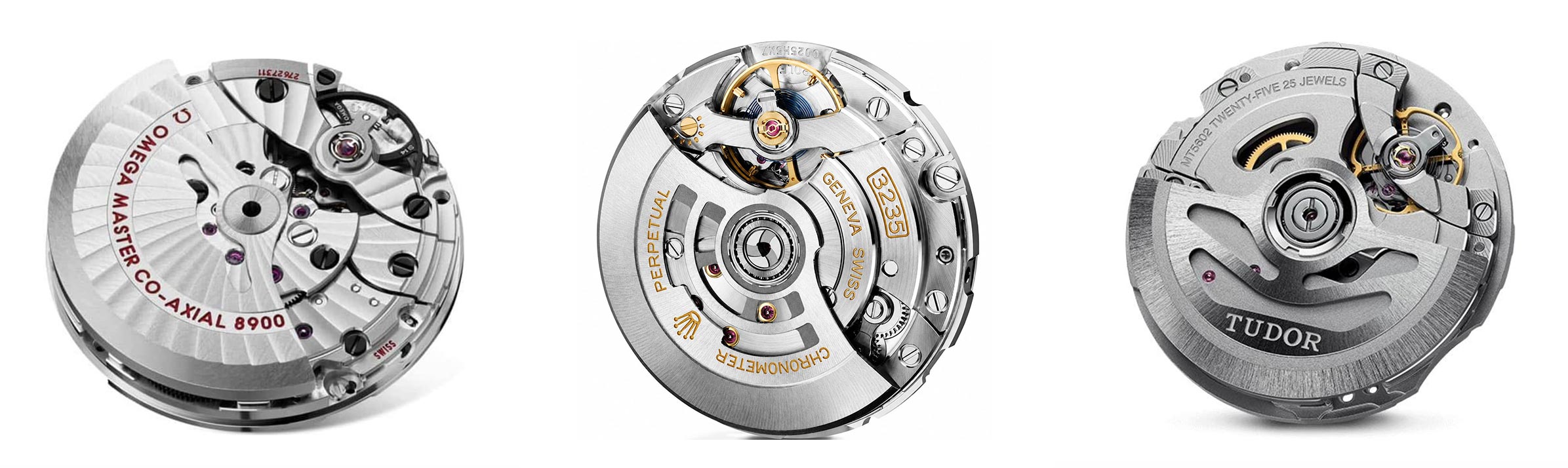
Is In-House Always Better?
“It all comes down to your collection priorities…”
Having an in-house movement doesn’t automatically make a watch more accurate, more durable, or easier to service. A movement’s actual performance still depends on its engineering and design, the quality of its materials, component tolerances, and the skill of the technician when regulating and tuning it.
On the other hand, third-party movements from specialized manufacturers have their own advantages. Popular movements such as the ETA 2824-2, Sellita SW200-1, and Seiko/TMI NH35 have been used by many different watch brands. They are widely known for their relatively simple construction, ease of servicing, and good availability of spare parts.
For someone wearing a watch every day, these qualities can be a real advantage. A movement that is easy to service and has readily available parts can make long-term ownership much more convenient and cost-effective.
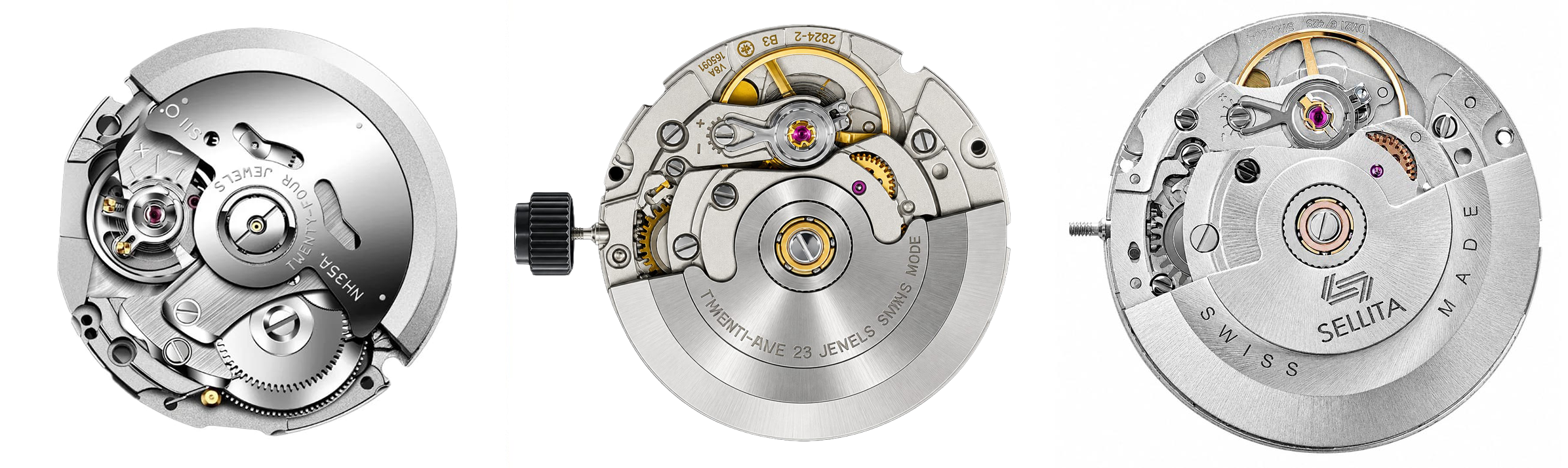
Comparing Watch Movements: In-House vs. Third-Party
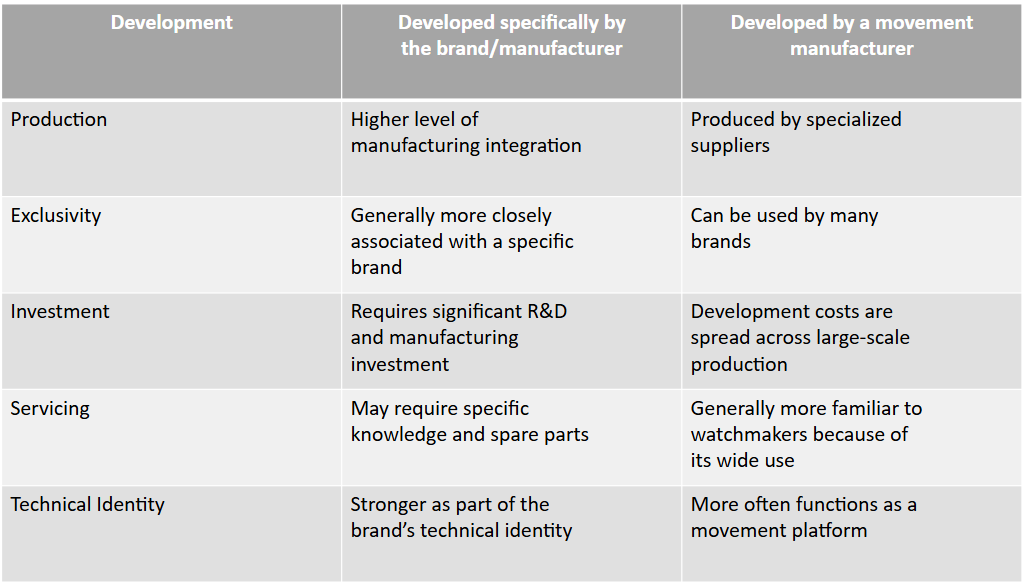
Of course, there are always exceptions. Some high-end third-party movements come with exclusive specifications, while certain in-house movements may require specialized knowledge or servicing through the brand’s official service network.
So, Which One Is Right for You?
In the end, it really depends on what you value in a watch and what you want from your collection. An in-house movement can be very appealing to collectors who appreciate a brand’s history, exclusivity, and the craftsmanship involved in fine watchmaking (horology).
Meanwhile, third-party movements such as ETA, Sellita, and TMI offer a more practical approach. They are proven, durable enough for everyday use, and generally easier to service, with spare parts that are relatively easy to find.
Before adding a new watch to your collection, it’s worth looking beyond the “in-house” label. Take a closer look at the calibre being used, its accuracy, finishing quality, the brand’s reputation, and how easy it will be to maintain over the long term.
At the end of the day, the quality and reliability of a movement matter more than the label itself.
Being “in-house” is an indication of a brand’s ability to develop and manufacture its own technology. It is not a guarantee that the movement is automatically better than every third-party movement used by other watch brands.